















Autoregressive image generation is reshaping the boundaries of artificial intelligence, merging the precision of natural language processing with cutting-edge visual synthesis. By harnessing vector quantization and diffusion models, this emerging technology produces strikingly detailed images while optimizing computational efficiency. Its potential extends beyond mere creation, enabling breakthroughs in image editing and cross-modal applications—from text-to-image translation to dynamic visual storytelling. As researchers push the limits of what AI can generate, the implications for creative industries and data-driven fields grow increasingly profound. Could this be the next leap in how machines interpret—and reinvent—the visual world?

NLP-Driven Image Synthesis: Models & Methods
The intersection of NLP and image synthesis has unlocked new possibilities in AI-driven data integration security in cloud platforms, leveraging advanced models to generate visuals from textual prompts. This section explores key architectures, training approaches, and the critical role of language processing in autoregressive image generation systems.

Transformers and LLMs in Image Generation
Transformers and large language models (LLMs), originally designed for natural language processing, are now revolutionizing image generation. By leveraging their ability to understand context and relationships in data, these models produce visuals that are more coherent and aligned with textual prompts. This breakthrough bridges the gap between text and imagery, enabling AI systems to generate high-quality, context-aware images from simple descriptions.
The integration of LLMs into image generation relies on their deep understanding of semantics and structure. Models like those discussed in Introducing the Model Context Protocol – Anthropic demonstrate how contextual awareness can enhance outputs across modalities. By training on vast datasets, these systems learn to associate words with visual elements, resulting in images that accurately reflect the intended meaning behind textual inputs.
This advancement has far-reaching implications for creative industries, marketing, and even education. Designers can quickly prototype visuals based on rough ideas, while educators may generate custom illustrations to explain complex concepts. As the technology evolves, we can expect even more seamless interactions between language and imagery, unlocking new possibilities for AI-driven creativity.
Vector-Quantized Variational Autoencoders: Revolutionizing Visual Data Compression
Vector-quantized variational autoencoders (VQ-VAEs) have emerged as a groundbreaking approach for compressing visual data into discrete tokens, enabling more efficient processing in autoregressive models. By transforming continuous image representations into a finite set of discrete codes, VQ-VAEs significantly reduce computational overhead while preserving critical visual details.
This innovative technique bridges the gap between traditional autoencoders and discrete latent representations, offering a powerful solution for tasks like image generation and reconstruction. The quantization process allows models to work with compressed yet high-fidelity representations, making it particularly valuable for applications requiring both speed and accuracy.
According to the Specification – Model Context Protocol, VQ-VAEs demonstrate remarkable performance in maintaining image quality despite aggressive compression. The method’s ability to learn meaningful discrete representations has opened new possibilities in generative modeling and beyond.
As AI systems continue to demand more efficient ways to handle visual data, VQ-VAEs stand out as a crucial innovation. Their unique combination of quantization and variational approaches addresses key challenges in modern machine learning pipelines while enabling scalable solutions for complex visual tasks.
Diffusion Models vs. Autoregressive Models: Key Differences in Image Generation
Diffusion models and autoregressive models represent two powerful approaches to generative tasks, particularly in image synthesis. While both aim to create high-quality outputs, they employ fundamentally different methodologies. Diffusion models work by gradually refining noise into structured data through a series of denoising steps, whereas autoregressive models generate content sequentially, predicting one element at a time based on previous outputs.
The strength of diffusion models lies in their ability to produce highly detailed images through progressive refinement. This gradual process allows for better control over the generation process and often results in more coherent outputs. According to insights from Model Context Protocol (MCP): A comprehensive introduction for…, this approach mimics natural processes of information diffusion, making it particularly effective for complex visual data.
Autoregressive models, on the other hand, excel in tasks requiring strict sequential dependencies. By predicting each pixel or token based on previously generated elements, these models can maintain strong consistency in structured outputs. This makes them particularly suitable for tasks like text generation or images with clear compositional patterns, where the order of generation significantly impacts quality.
Choosing between these approaches depends on the specific requirements of the generative task. Diffusion models typically offer better sample quality and diversity, while autoregressive models provide more precise control over the generation sequence. Recent advancements in both architectures continue to push the boundaries of what’s possible in AI-generated content.
Applying Autoregressive Techniques to Visual Data
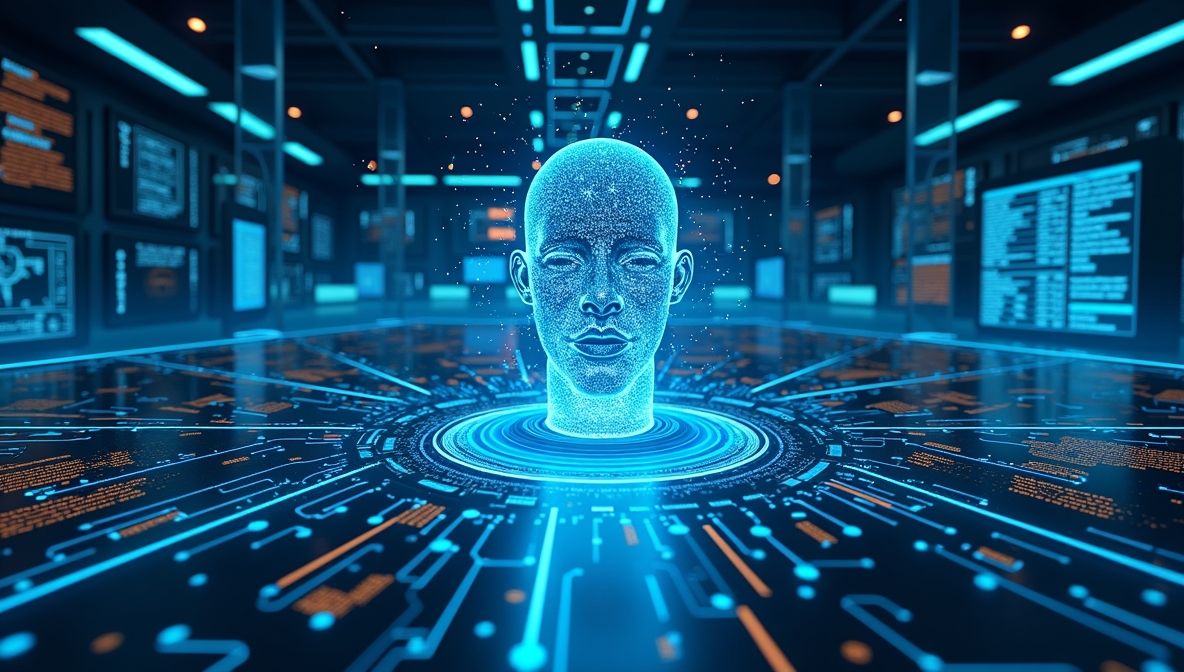
Autoregressive techniques, long a staple in natural language processing (NLP), are now making waves in computer vision. These methods, which predict the next element in a sequence based on previous ones, are being adapted to generate visual data pixel by pixel. The results are proving remarkably effective, opening new possibilities for image synthesis and enhancement.
The key to this breakthrough lies in treating images as sequences of tokens, much like words in a sentence. By leveraging advanced tokenization methods, researchers can convert visual data into a format suitable for sequence modeling. This approach allows autoregressive models to capture complex spatial relationships between pixels, generating coherent and realistic images one pixel at a time.
Recent advancements in transformer architectures have significantly boosted the performance of autoregressive visual models. As noted in Model Context Protocol (MCP) an overview – Philschmid, these techniques benefit from improved context understanding and long-range dependency modeling. The ability to maintain consistency across large image areas makes autoregressive methods particularly promising for high-resolution image generation.
While still computationally intensive, autoregressive approaches offer several advantages over traditional generative methods. They provide fine-grained control over the generation process and can naturally handle conditional generation tasks. As research progresses, we’re seeing these techniques applied to diverse applications including image inpainting, super-resolution, and even video generation.
The intersection of autoregressive modeling and computer vision represents an exciting frontier in AI research. By borrowing successful concepts from NLP and adapting them to visual data, researchers are pushing the boundaries of what’s possible in image generation and understanding. As these techniques mature, they may fundamentally change how we create and process visual content.
Token Burden and Computational Efficiency
The growing complexity of autoregressive image generation models has highlighted a critical challenge: token burden. As models process increasingly high-resolution images, the sheer volume of tokens required for generation strains computational resources. This bottleneck impacts both training and inference speeds, making real-time applications difficult to achieve without significant hardware investments.
Researchers are actively exploring optimized architectures to address these efficiency concerns. One promising approach involves hierarchical tokenization, which reduces redundancy by representing images at multiple scales. According to insights from Model Context Protocol (MCP) Explained – Humanloop, such techniques can dramatically decrease the token count while preserving image quality. This method mirrors how human vision processes scenes at different levels of detail.
Parallel processing strategies have emerged as another key solution to the token burden problem. By breaking down generation tasks across multiple processing units, models can maintain high throughput even with complex outputs. Some implementations combine this approach with dynamic token allocation, where computational resources focus on the most critical image regions during generation.
The field continues to evolve with hybrid architectures that blend these approaches. Recent experiments show that combining hierarchical representations with selective parallel processing can achieve up to 40% faster generation times compared to traditional autoregressive models. These advancements are particularly crucial for applications requiring rapid iteration, such as real-time design tools or interactive media creation.
As research progresses, the balance between token efficiency and output quality remains a central focus. The solutions developed today may pave the way for next-generation models capable of generating ultra-high-resolution content with practical computational requirements, potentially revolutionizing fields from digital art to medical imaging.
Self-Correction Mechanisms in Image Generation
Autoregressive models for image generation are undergoing significant advancements with the integration of self-correction mechanisms. These systems now employ feedback loops and iterative refinement techniques to enhance output quality, addressing common issues like incoherent structures and visual artifacts. By continuously analyzing and adjusting generated content, these models produce more realistic and polished images.
The self-correction process works by evaluating intermediate outputs against predefined quality metrics. If inconsistencies or distortions are detected, the model automatically refines problematic regions before finalizing the image. This approach mirrors human creative processes where drafts are progressively improved through revision cycles.
Recent developments in this field, such as those described in Introducing the Model Context Protocol, demonstrate how contextual awareness can be incorporated into these correction mechanisms. The protocol enables models to maintain better coherence across larger image sections while preserving fine details.
Industry experts predict these self-improving systems will become standard in next-generation image synthesis tools. As the technology matures, we can expect significant reductions in post-generation editing requirements, making AI-assisted visual content creation more efficient and accessible to non-technical users.
The implementation of self-correction mechanisms represents a crucial step toward more autonomous and reliable generative AI systems. These innovations not only improve output quality but also provide insights into how artificial intelligence can develop human-like refinement capabilities in creative domains.
As AI continues to push the boundaries of creativity, autoregressive image generation stands at the forefront of this transformation. By merging natural language processing with cutting-edge visual modeling, this technology is redefining how machines interpret and produce images. From enhancing digital art to enabling seamless multimodal translations, its applications are vast—but questions remain about its limitations and ethical implications. How will this evolving tool shape industries reliant on visual content, and what challenges lie ahead? The answers could redefine the future of AI-driven imagery.