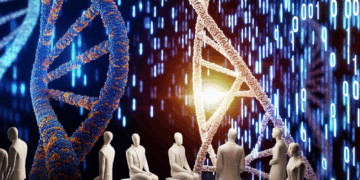










Deep learning is transforming the field of genomics, unlocking unprecedented precision in predicting genetic variants and modeling gene expression. Cutting-edge neural networks, including transformer-based architectures, are now being tailored to decode the intricate patterns of genomic data—revealing hidden insights into non-coding regions and chromatin dynamics. As these AI-driven tools evolve, they hold immense promise for accelerating discoveries in cancer research and rare genetic disorders. But how exactly are these models reshaping our understanding of the genome, and what challenges remain in bridging the gap between computational predictions and clinical applications?

Deep Learning Applications in Genomics for Rare Disease Diagnosis
Advances in deep learning applications in genomics for rare disease diagnosis are transforming how researchers and clinicians approach these complex conditions. From uncovering elusive genetic markers to tailoring individualized therapies, these technologies offer new hope for patients and families affected by rare disorders.
Deep Learning Architectures for Genomic Data
The field of genomics is undergoing a revolution thanks to advancements in deep learning, which are enabling researchers to decode complex biological data with unprecedented accuracy. Traditional machine learning models often struggle with the vast scale and intricate patterns found in genomic sequences. However, modern deep learning architectures, particularly transformer models, are proving highly effective in analyzing DNA sequences by capturing long-range dependencies and identifying subtle genetic variations.
Transformers, originally developed for natural language processing, have been adapted to genomic data due to their ability to process sequential information efficiently. These models excel at recognizing patterns across large stretches of DNA, such as identifying regulatory elements or predicting gene expression. According to AlphaGenome: AI for better understanding the genome, transformer-based approaches are unlocking new insights into genetic mutations, disease mechanisms, and potential therapeutic targets.
Beyond transformers, convolutional neural networks (CNNs) and recurrent neural networks (RNNs) are also being refined for genomic applications. CNNs help detect local sequence motifs, while RNNs analyze temporal dependencies in gene expression data. Combining these architectures with large-scale genomic datasets is accelerating discoveries in personalized medicine, where AI-driven models can predict patient-specific responses to treatments based on their genetic makeup.
As deep learning continues to evolve, its integration with genomics promises to transform healthcare, agriculture, and biotechnology. Researchers are optimistic that these AI-driven tools will lead to breakthroughs in understanding complex diseases, improving crop resilience, and even uncovering the fundamental mechanisms of life itself.
Variant Effect Prediction and Clinical Applications
Recent advancements in computational biology are revolutionizing how scientists predict the functional impact of genetic variants. New models, such as those developed by Google DeepMind’s AlphaGenome, leverage artificial intelligence to analyze vast genomic datasets with unprecedented accuracy. These breakthroughs are critical for identifying disease-causing mutations and accelerating precision medicine research.
The improved prediction capabilities allow researchers to distinguish between benign variants and those linked to serious health conditions. By analyzing protein structures and genetic interactions, these models can pinpoint how specific DNA changes alter biological functions. This level of detail helps clinicians interpret genetic test results more effectively, leading to better-informed treatment decisions.
In clinical settings, these tools are already showing promise for rare disease diagnosis and cancer genomics. Hospitals and research institutions are adopting variant prediction models to streamline the identification of therapeutic targets and reduce diagnostic odysseys for patients with undiagnosed conditions. The integration of AI-driven analysis into genetic testing workflows is expected to become standard practice within the next decade.
Looking ahead, continued refinement of these predictive models could transform drug development pipelines. Pharmaceutical companies are exploring how to use these tools to identify patient subgroups most likely to respond to experimental therapies. As noted in the AlphaGenome project, combining deep learning with genomic data may unlock new possibilities for personalized treatment strategies across multiple disease areas.
Role of Non-Coding DNA in Gene Regulation
Deep learning tools are revolutionizing our understanding of non-coding DNA, once dismissed as “junk DNA.” Researchers are now uncovering how these regions play crucial regulatory roles in gene expression, influencing everything from cellular function to disease development. Advanced AI models, such as DeepMind’s AlphaGenome, are decoding the complex interactions between non-coding sequences and gene activity.
Non-coding regions make up about 98% of the human genome, yet their functions have long remained a mystery. Recent breakthroughs in deep learning allow scientists to predict how mutations in these areas disrupt gene regulation, leading to conditions like cancer or autoimmune disorders. By analyzing vast genomic datasets, AI can identify patterns that traditional methods might miss.
One notable advancement is DeepMind’s AlphaGenome, which leverages machine learning to map how genetic variations alter gene expression. This tool provides unprecedented insights into the mechanisms behind diseases, potentially accelerating the development of targeted therapies. Such innovations highlight the growing synergy between genomics and artificial intelligence.
As research progresses, the implications for personalized medicine are profound. Understanding non-coding DNA’s regulatory role could lead to earlier disease detection and more precise treatments. With AI-driven tools leading the charge, the future of genomic medicine looks increasingly data-driven and transformative.
Transformer Models Revolutionize Bioinformatics with Genomic Breakthroughs
The field of bioinformatics is undergoing a seismic shift as transformer models—originally developed for natural language processing—are being repurposed to decode the complex language of genomics. These advanced neural networks excel at modeling intricate genomic interactions, offering researchers unprecedented tools for analyzing massive biological datasets with remarkable accuracy.
Recent breakthroughs demonstrate how transformers can identify patterns across entire genomes, predicting protein structures and gene functions that previously required years of laboratory experimentation. The models’ self-attention mechanisms prove particularly valuable for understanding non-coding DNA regions, often referred to as the “dark matter” of our genetic blueprint.
Leading this charge is Google DeepMind’s AlphaGenome, which leverages transformer architecture to map previously incomprehensible genomic relationships. The system’s ability to process billions of nucleotide sequences simultaneously represents a quantum leap in computational biology, potentially accelerating drug discovery and personalized medicine.
As transformer models become more sophisticated, they’re solving bioinformatics challenges ranging from variant interpretation to whole-genome alignment. Their scalable architecture allows researchers to analyze population-level genomic data while maintaining precision at the individual nucleotide level—a capability that could unlock new frontiers in genetic research and therapeutic development.
Multimodal Data Integration in Genomics
Recent advancements in genomics research have highlighted the power of integrating diverse data types, such as chromatin accessibility and gene expression, to enhance the predictive capabilities of deep learning models. By combining these multimodal datasets, scientists can gain a more comprehensive understanding of how genetic variations influence biological processes. This approach allows for more accurate predictions of the functional impact of DNA mutations, paving the way for breakthroughs in personalized medicine and disease research.
One notable example of this innovation is Google DeepMind’s AlphaGenome, a cutting-edge deep learning model designed to predict the effects of single DNA variants or mutations. AlphaGenome leverages multimodal data integration to improve its accuracy, demonstrating how combining different genomic signals can lead to more robust and reliable predictions. This model represents a significant leap forward in computational genomics.
The integration of chromatin accessibility data—which reveals regions of open DNA—with gene expression profiles provides deeper insights into gene regulation mechanisms. When fed into deep learning algorithms, these combined datasets enable models to identify patterns that would be invisible when analyzing each data type in isolation. This holistic approach is particularly valuable for understanding complex diseases influenced by multiple genetic and epigenetic factors.
As multimodal data integration becomes more widespread, researchers anticipate accelerated progress in identifying disease-causing mutations and developing targeted therapies. The success of models like AlphaGenome underscores the importance of interdisciplinary collaboration, merging genomics, bioinformatics, and artificial intelligence to unlock new possibilities in biomedical research.
Cancer Genomics and Regulatory Mutations
Deep learning is revolutionizing cancer research by uncovering regulatory mutations in cancer genomes. These mutations, which affect gene expression rather than protein-coding sequences, play a critical role in tumor development and progression. By leveraging AI, researchers can now pinpoint these elusive genetic variations with unprecedented accuracy.
Traditional genomic analysis often focused on protein-coding mutations, but regulatory mutations—located in non-coding DNA—have been harder to detect. Advanced deep learning models, like those developed by AlphaGenome, analyze vast genomic datasets to identify these hidden drivers of cancer. This breakthrough opens new possibilities for understanding tumor heterogeneity and resistance mechanisms.
The implications for precision oncology are profound. Identifying regulatory mutations enables tailored therapies that target the root causes of cancer at the molecular level. Clinicians can now design personalized treatment plans based on a patient’s unique genomic profile, improving outcomes and reducing side effects.
Beyond diagnostics, this AI-driven approach accelerates drug discovery. Pharmaceutical companies can use these insights to develop novel therapeutics that specifically disrupt cancer-causing regulatory networks. As deep learning continues to refine genomic analysis, the future of cancer treatment looks increasingly precise and effective.
Handling Long-Range DNA Sequence Context
Recent advancements in genomic research are tackling one of the most persistent challenges in DNA analysis: accurately modeling long-range dependencies within genetic sequences. Traditional methods often struggle to capture interactions between distant genetic elements, limiting their ability to interpret variants or predict regulatory functions effectively. New computational approaches are now bridging this gap, offering unprecedented insights into the complex spatial relationships within our genetic code.
Innovative deep learning architectures, such as those developed by google-deepmind/alphagenome, demonstrate remarkable progress in understanding these long-range connections. These models can process entire chromosomes while maintaining awareness of interactions between regulatory elements that may be thousands of base pairs apart. This capability significantly enhances variant interpretation accuracy, particularly for non-coding regions where regulatory functions are often determined by distant sequence relationships.
The improved modeling of long-range DNA context has far-reaching implications for both research and clinical applications. Scientists can now better predict how genetic variations might affect gene regulation across large genomic distances, leading to more precise identification of disease-associated variants. This breakthrough also enables more accurate reconstruction of the three-dimensional organization of chromatin, providing crucial insights into how DNA folding influences gene expression patterns.
As these technologies continue to evolve, they promise to unlock deeper understanding of complex genetic phenomena. From uncovering the mechanisms behind developmental disorders to improving personalized medicine approaches, the ability to analyze DNA sequences in their full genomic context represents a transformative step forward in genomic science. The open-source availability of tools like AlphaGenome ensures this progress remains accessible to the broader research community.
As artificial intelligence reshapes the field of genomics, deep learning models are unlocking unprecedented precision in predicting genetic variants and decoding gene expression patterns. Cutting-edge transformer architectures, originally designed for language processing, are now being repurposed to analyze the intricate language of DNA—revealing hidden patterns in non-coding regions and chromatin structure. These advancements are not just academic; they hold transformative potential for diagnosing rare diseases and personalizing cancer treatments. The convergence of AI and genomics is accelerating discoveries, but how exactly are these tools rewriting the rules of genetic research—and what ethical questions arise in their wake?
Stay in the loop with our latest updates — visit youraitips.com/news for daily insights.