















Table of Contents
ToggleWhat is Claude AI? What’s new, and should you choose Claude or ChatGPT in 2025?
Introduce

I get why—it’s one of the few AI assistants that instantly grabbed my attention the moment I tried it. While many chatbots aim to be powerful, Claude feels different: more thoughtful, more careful, and surprisingly good at understanding long, complex content.
So if you’re wondering what Claude AI actually is, who built it, and why so many people (including me) are switching to it, this section will give you a clear and practical explanation.
What exactly Claude AI ?
Claude AI is an advanced AI assistant designed to help with writing, analysis, coding, summarizing long documents, and natural conversational tasks.
Unlike many chatbots that focus primarily on generating fast responses, Claude is built around
the idea of being helpful, honest, and harmless.
In my own experience using multiple AI models daily, Claude feels more like
a careful analyst than a flashy chatbot. It excels at reading long texts, making sense of complicated instructions, and producing responses that feel more grounded and context-aware.

Who created Claude AI? (Anthropic explained)
Claude was created by Anthropic, an AI research company formed by former OpenAI researchers, including siblings Dario and Daniela Amodei. Anthropic’s mission is rooted in the belief that AI should be developed safely, transparently, and with strong alignment to human values.
Many people refer to the tool as Anthropics Claude or Anthropic’s Claude, especially when searching for information about the company’s unique approach to AI development.
What sets Anthropic apart is its philosophy: instead of only trying to build the most powerful AI, they focus on building the safest and most reliable one.
Anthropic’s Goal: Safety and “Constitutional AI”
One of the reasons Claude AI has become so trusted is because it’s built using a framework Anthropic calls Constitutional AI. In simple terms, Constitutional AI means:
- Claude is guided by a set of principles (a “constitution”).
- These principles teach the model how to behave ethically and responsibly.
- It reduces harmful outputs and makes the model more transparent in its reasoning.
As someone who uses AI for research, content generation, and professional tasks, I’ve noticed that Claude’s answers tend to be:
- more cautious in uncertain scenarios,
- more accurate when interpreting long instructions,
- less likely to produce problematic or misleading content.
This is exactly why many users today prefer Claude for tasks where accuracy, clarity, or safety matter more than speed.

What’s new in Claude AI in 2025?
The 2025 update of Claude AI marks one of its biggest leaps forward, pushing the assistant into a new generation of intelligence, usability, and real-world capability. Whether you use Claude for research, coding, creative work, or enterprise-level operations, the newest improvements make the experience noticeably more powerful and intuitive. Here’s what’s new in Claude AI for 2025:
1. New and More Capable Models (Claude Sonnet 4.5, Haiku 4.5, Opus 4.5, or 2025 Editions)
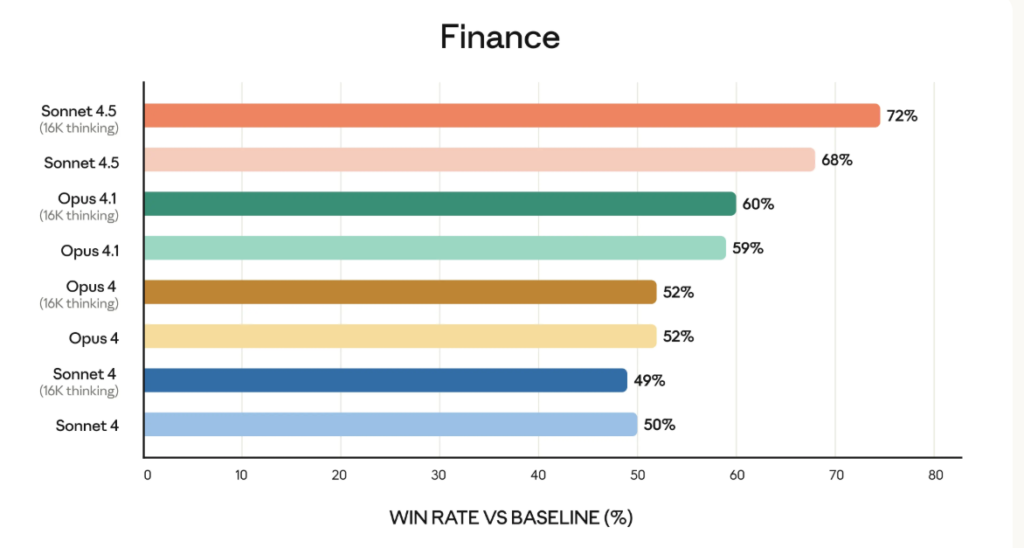
Anthropic continues refining Claude’s core models, introducing versions such as Claude Sonnet 4.5, Claude Haiku 4.5, Claude Opus 4.5 and potential 2025-tier models optimized for higher performance and safer reasoning. These models aim to deliver:
more accurate long-form reasoning
deeper contextual understanding
faster response generation
higher reliability in professional tasks
Each new release pushes Claude closer to behaving like a careful, knowledgeable digital researcher rather than a typical chatbot.

2. Advanced Reasoning, Coding, Document Handling & Image Understanding
The 2025 Claude update enhances several core abilities:
Reasoning: Claude is now significantly better at step-by-step thinking, logical breakdowns, and problem-solving.
Coding: Better at debugging, refactoring, generating entire codebases, and understanding complex repositories.
Documents: Claude can read and analyze larger, more complex files with far higher accuracy.
Image Understanding: Claude is now able to interpret diagrams, visuals, and screenshots with deeper context awareness.
These upgrades make Claude far more versatile — suitable for academic work, data analysis, and even enterprise-level decision support.

3. Expanded Context Window (Handle Bigger Projects at Once)
One of the most impressive improvements in Claude AI for 2025 is its expanded context window. This allows Claude to process:
longer conversations
entire PDF documents
book chapters
large datasets or codebases
Instead of losing track or forgetting earlier details, Claude can now stay coherent across much longer interactions — a major win for researchers, developers, and content creators.
4. Performance Improvements Across the Board
Anthropic has also introduced major performance refinements:
much faster response times
fewer hallucinations
higher factual accuracy
more stable behavior in edge-case scenarios
improved safety alignment, reducing misleading outputs
The result is a smoother, more predictable AI assistant that behaves consistently even in highly technical or ambiguous situations.
How Does Claude AI Compare With ChatGPT in Real-World Tasks?
When choosing between Claude AI and ChatGPT, the most important question isn’t “Which model is more powerful?” but rather “Which one is better for the specific work I need to do?”
Both AIs are exceptional — but they shine in different areas. After using both models extensively for writing, coding, research, and business workflows, here’s how they stack up in real-world scenarios.
1. Speed and Response Time
Claude AI
Claude AI tends to prioritize quality and safety over raw speed. It may take slightly longer to produce a response, especially for complex reasoning or large document analysis. However, the output is often more careful, more structured, and more reliable.
ChatGPT
ChatGPT is generally faster, particularly in short-form tasks or everyday conversations. It produces responses quickly, making it ideal for brainstorming, quick answers, and rapid prototypes.

Conclusion:
- Need speed? → ChatGPT
- Need stability & reliability for complex tasks? → Claude AI
2. Reasoning and Coding Ability
Claude AI
Claude has become known for its stronger logical reasoning and context retention. It handles long instructions remarkably well and is less likely to skip steps. For coding, Claude excels at:
understanding large codebases
debugging with detailed explanations
refactoring code thoughtfully
generating structured multi-file projects
Developers appreciate Claude because it “thinks aloud” more transparently and avoids risky assumptions.
ChatGPT
ChatGPT is still incredibly strong at coding, especially for quick functions, scripts, and rapid brainstorming. It often gives more creative code solutions and can be more flexible for iterative prompts.

3. Writing and Creative Tasks
Claude AI
Claude produces writing that feels: Calm, Thoughtful, natural, less likely to exaggerate or “Ramble”
Its tone is excellent for academic writing, professional emails, long-form content, and content requiring factual precision.
ChatGPT
ChatGPT shines in pure creativity:
storytelling
brainstorming
marketing copy
playful or emotional writing
It generates ideas rapidly and with more flair compared to Claude.
4. Safety, Reliability & Hallucination Reduction
Claude AI
Anthropic’s emphasis on Constitutional AI gives Claude a significant advantage in trustworthiness
This makes it ideal for research, legal content, healthcare-related explanations, and enterprise environments.
ChatGPT
ChatGPT is safer than ever, but it still tends to “fill in the blanks” when unsure. This is useful for creativity but less ideal for factual or high-stakes tasks.
5. Pricing Differences (Depending on Model & Usage)
Claude AI
Pricing depends on the Claude model tier (e.g., Claude 3 or 3.5, Claude Opus 4.5 (most powerful),Sonnet 4.5 (balanced), Haiku 4.5 (fastest)).
Claude is often priced competitively for large-context tasks, making it a good choice for document-heavy workflows.
ChatGPT
ChatGPT (especially GPT-4 or GPT-4.1 tiers) may offer lower-cost options depending on usage, including API pricing and subscription tiers like ChatGPT Plus.

Which AI Should You Use — and For What Purpose?
Choosing between Claude AI and ChatGPT ultimately depends on what you need the AI to do. Each model has strengths that make it better suited for specific types of tasks:

Use Claude AI if your work requires:
Accuracy and factual clarity
Deep reasoning or complex problem-solving
Long document analysis or multi-step instructions
Reliable coding assistance and debugging
Safe, careful, and transparent outputs
Claude is ideal for researchers, analysts, developers, professionals, and anyone who needs an AI that behaves more like a thoughtful collaborator than a fast chatbot.
Use ChatGPT if your work requires:
Creative brainstorming
Storytelling, marketing copy, or imaginative writing
Fast answers or rapid idea generation
Lightweight coding tasks or quick prototypes
Conversational content or interactive teaching
ChatGPT is perfect for creators, marketers, students, and users who value speed, creativity, and flexible conversation.